
The Intelligent Heating Center: Reducing Generation Costs by Up to 30%
Green heating networks are becoming significantly more complex: they involve a greater variety of heat generation plants and storage systems, are subject to volatile electricity prices and heat demand, and — crucially — everything must be seamlessly synchronized and intelligently automated. The good news is that, through optimized operation, generation costs can be reduced by an average of 20–30%, thereby making green heat a competitive alternative to decentralized, standalone solutions.
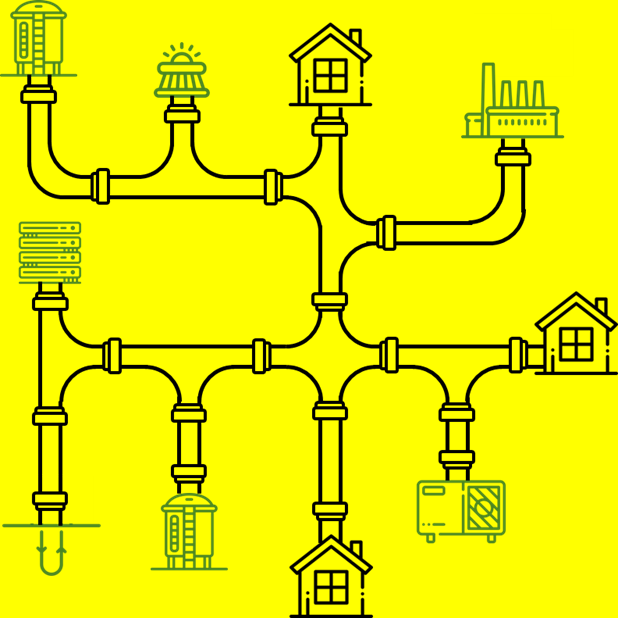
Step 1: Simulate (HeatSim)

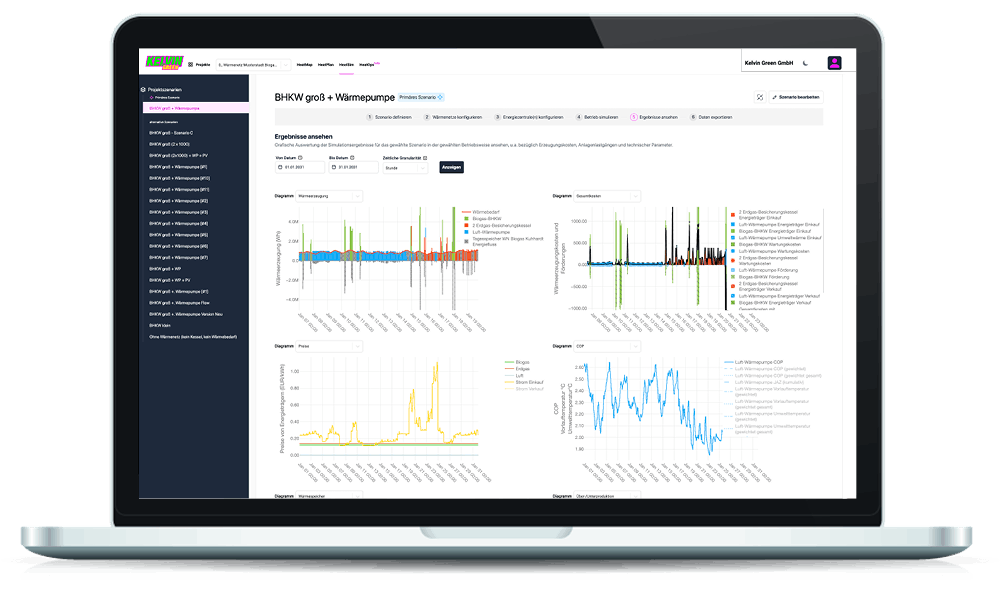
What if? An air-source heat pump combined with a biogas-fueled CHP unit and a natural gas boiler — or perhaps solar thermal energy paired with a geothermal heat pump instead? Thermal storage — yes or no, and if so, how large? What must my current electricity procurement price (AP0) be for new contracts today if I plan to commission a heat pump two years from now? Can I potentially optimize heating costs or maximize electricity revenue right now by adopting a market-price-oriented operating strategy?
These are all critically important questions — questions that, particularly within multivalent energy networks and amidst electricity prices that fluctuate every fifteen minutes, no Excel model — no matter how sophisticated — can answer with anything approaching true accuracy!
That is why: Before you build your new system, simply simulate it first using Kelvin Green’s HeatSim — with extremely high resolution and a clear focus on economic viability. After all, the system must not only function technically but also make economic sense!
And we promise: With HeatSim, the process is fast and intuitive, yet simultaneously extremely precise — because this simulation tool was specifically designed to optimize energy systems under real-world operating conditions.
 Tariff optimization
Design new heating contracts, AP0 and price formula for future generation costs and minimize the risk of loss.

Specialist planning and system design
Optimally design systems with weighted COP and hourly load profiles of heat pumps and storage behavior.
Operational optimization
Calculate potential savings through optimized operating modes and derive priorities.
JAZ for M4
Optimally design systems with weighted COP and hourly load profiles of heat pumps and storage behavior.
Investment optimization
Compare different generation and storage variants and optimize full costs over the system lifetime.
Step 2: Optimize (HeatOps)
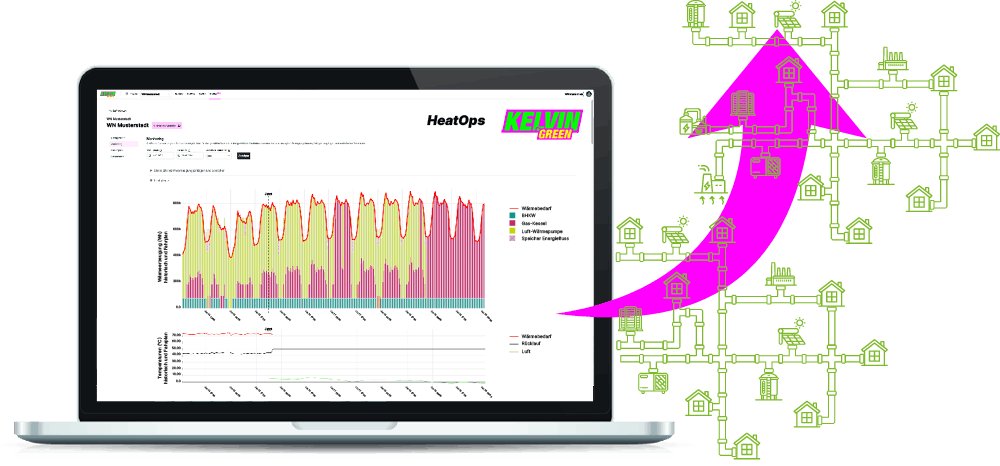
Save real money every day and offer happy customers reliable district heating at attractive prices — the dream of every heat supplier.
And particularly when I can combine heat pumps with boilers, storage units, CHP systems, and the like, I can fully leverage the advantages of district heating. BUT: only if I can truly maximize the operational flexibility inherent in these systems.
To achieve this, I need an agile — yet streamlined and easy-to-operate — deployment optimizer. This tool activates the heat pump when spot electricity prices are low, switches to the CHP unit when prices are high, and utilizes storage units, boilers, and other assets in the interim. Naturally, this is supported by hourly updates on electricity prices, load profiles, and weather forecasts, along with rigorous monitoring and automated alerts — a comprehensive solution applicable not only to large-scale urban networks but also to individual neighborhoods and districts.
And these are not empty promises: Our pilot customers are absolutely delighted! Don’t miss out on connecting to the intelligent heat center — schedule a no-obligation introductory meeting with us today!
Too good to be true?
Book an appointment for an individual live demonstration today and see for yourself!
Or take a closer look first?
Download further information here: